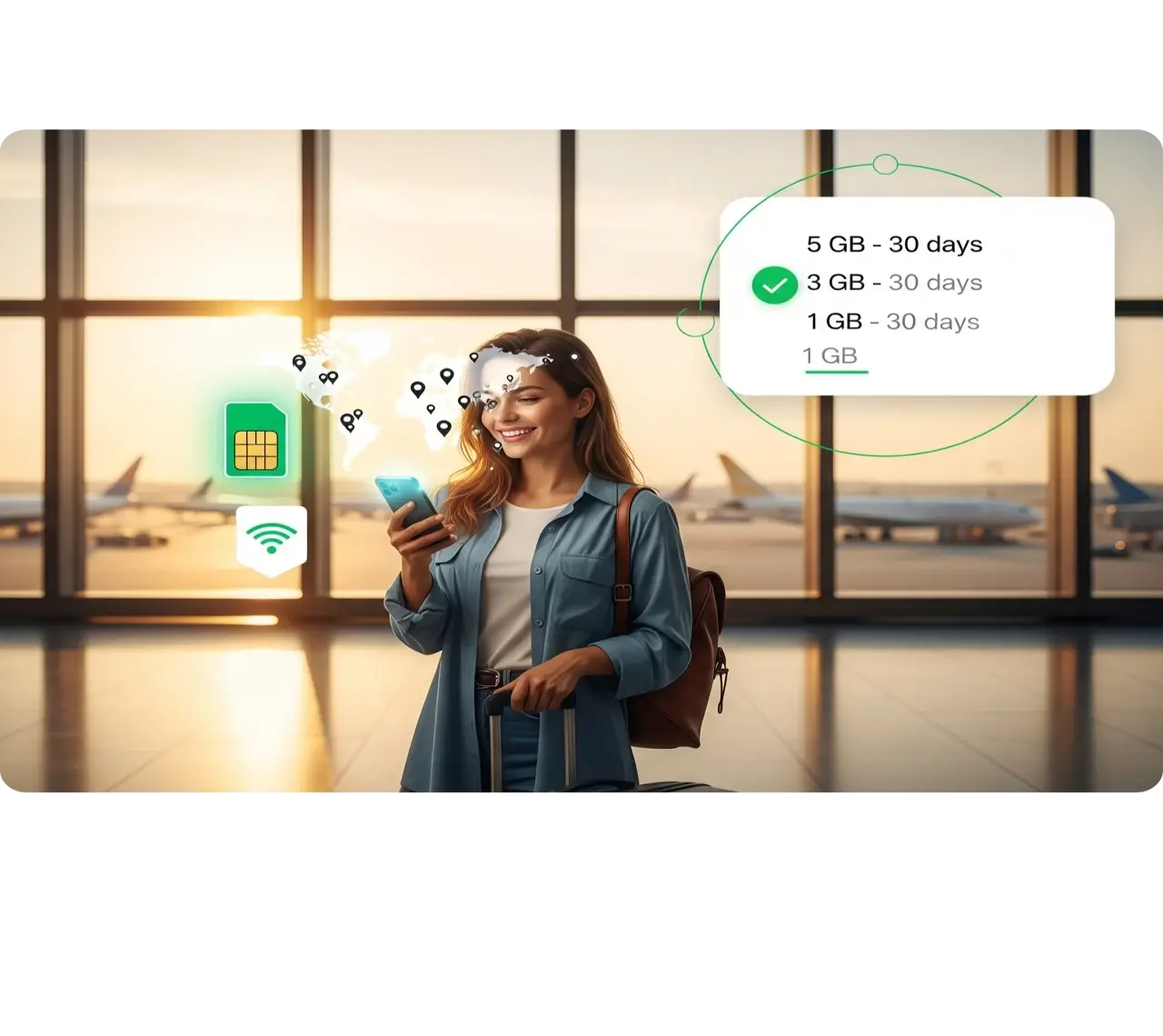
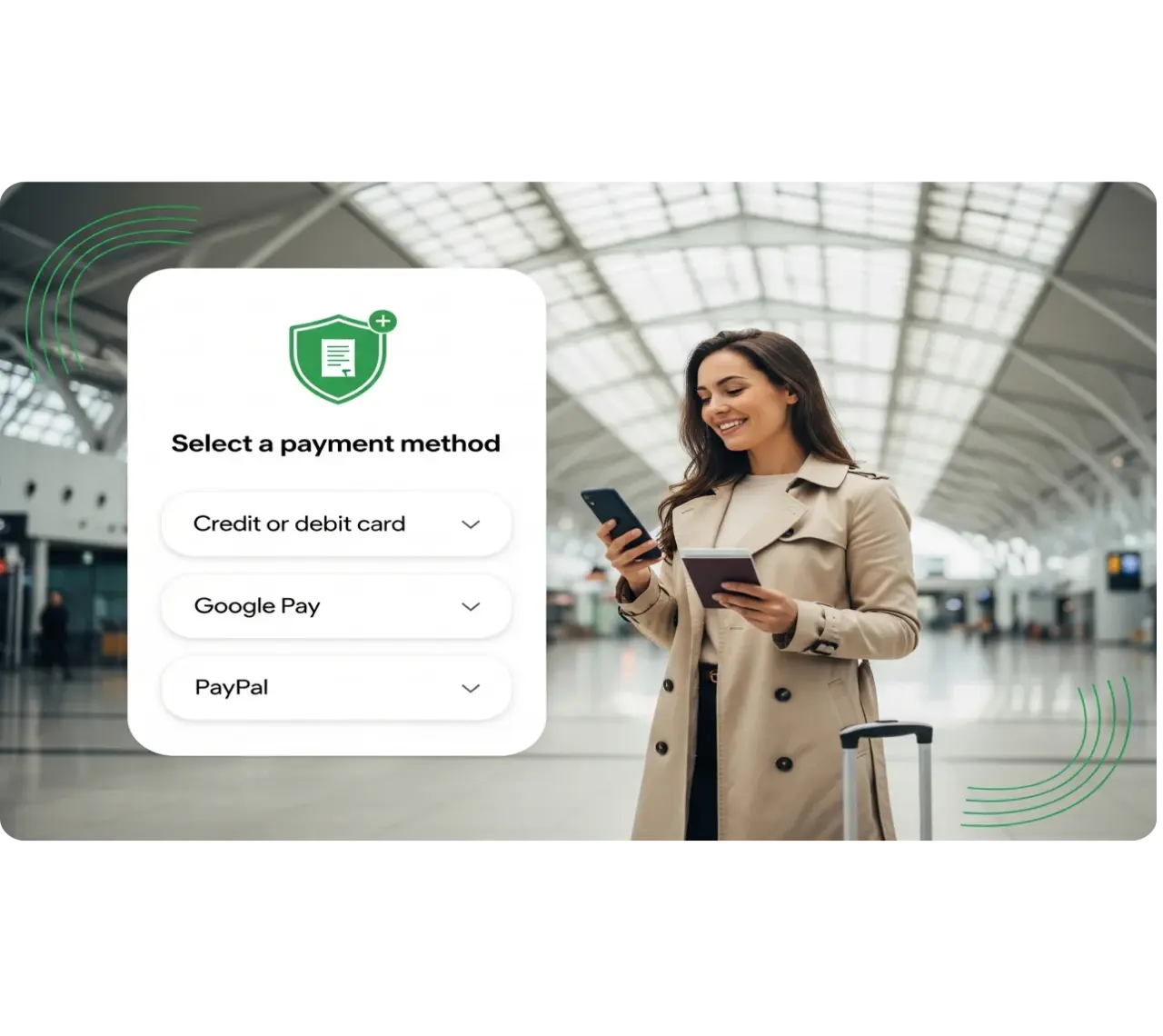
Stay Connected in Canada from Arrival to Departure
Read more
Landing at Toronto Pearson after a long flight is exhausting enough without hunting for Wi-Fi passwords just to order a ride or text your family. Scrambling to find a SIM card shop while carrying heavy luggage is the last thing you want to do after landing in Vancouver or Montreal.
Setting up an eSIM for Canada from home before you board takes that hassle away. Scan your QR code on the couch, and your phone connects to local high-speed data the second your flight touches down.
Why Choose an eSIM for Canada?
Read more
Saving money on roaming is a bonus, but the main draw is convenience. Instead of waiting for a plastic card in the mail or searching for a kiosk at the airport, everything happens online. You buy the package from home, scan the QR code, and the moment your plane lands in Canada you flip the line on and have working data.
Your original SIM never leaves your phone, so there is no risk of losing it while traveling. You can keep your main number active to catch bank codes and two-factor texts while the eSIM handles maps, messaging, and browsing.
There are no contracts either: you buy the data you need for your trip dates and top up online if you run low.
A few practical details before you buy:
- Data-only plans: Diva's Canada eSIM plans include mobile data only, with no voice minutes, traditional SMS, or Canadian phone number. WhatsApp, iMessage, FaceTime, and similar apps all work normally over data.
- Mobile hotspot / tethering: Supported. Share your connection with a laptop, tablet, or travel companions.
- Data top-up: Add more data from your Diva account without installing a new eSIM profile.
- Refund policy: If your trip is cancelled before the eSIM is activated, or your device has a verified technical incompatibility, Diva offers a full refund.
How Much Data Do You Need in Canada?
Read more
Figuring out your data budget saves you from running out of internet in the middle of a national park or paying for gigabytes you never touch. A weekend in Toronto needs a different plan than a two-week road trip through the Rockies, where you rely on maps for hours every day.
How you use your phone matters more than how long you stay. For basic travel use — Google Maps, restaurant reviews, WhatsApp — a 5 GB plan goes surprisingly far, especially if you save offline maps over hotel Wi-Fi. Things change fast if you work on the road: a single Zoom call with your camera on can use a gigabyte in an hour, and hotspotting a laptop or streaming on long drives calls for a 20 GB package.
Diva's Canada plans run from 5 GB up to 50 GB.
Crossing the US border? If your trip includes Seattle, New York, or the US side of Niagara Falls, a regional North America eSIM covers both countries with one plan, so you do not need to buy a second eSIM mid-trip.
| Trip Length | Suggested Data | Best Suited For | Real-World Usage Example |
|---|---|---|---|
| 3 to 5 days | 1 to 3 GB | Short city stays, light usage | Occasional maps, WhatsApp messaging, email, quick Uber rides |
| 7 days | 5 to 10 GB | Active sightseeing, social media | Daily GPS navigation, Instagram photos and stories, browsing reviews, light music streaming |
| 10 to 14 days | 10 to 20 GB | Road trips, remote work | Heavy daily browsing, Spotify on long drives, video calls, sharing travel videos |
| 30 days | 20 GB or more | Long stays, digital nomads, heavy hotspotting | Laptop hotspotting, daily Zoom or Teams meetings, HD streaming |
Ready to plan your Canadian adventure? Pick a plan that matches your travel dates. Getting this sorted today means you can cross it off your list and focus on the fun parts of your trip.
Canadian Networks & Coverage Details
Read more
Canada has three national mobile operators — Rogers, Bell, and Telus — plus regional carriers such as Freedom Mobile in major cities. Bell and Telus share network infrastructure across much of the country, and all three national networks deliver 4G LTE and 5G in cities and along major corridors.
Travel eSIMs do not run their own towers; they connect through local networks. Diva's Canada eSIM plans connect to [NETWORK NAME(S)] with 4G LTE and 5G where available.
5G and 4G Speeds in Major Cities
If you stay around the main urban centers, your phone will pick up fast data almost everywhere.
- Toronto & GTA: 5G from the airport terminal through downtown and the Harbourfront. On the TTC, station platforms generally have service, but signal can drop in deeper tunnel sections while the train is moving.
- Vancouver & Montreal: Full speed through downtown cores, transit routes, and water terminals; the same platform-versus-tunnel caveat applies on the Montreal metro.
- Calgary, Edmonton & Ottawa: Steady 4G and 5G for maps, streaming, and ride-hailing.
If you take the train or drive the Windsor–Quebec City corridor connecting Toronto, Ottawa, and Montreal, the signal stays steady almost the entire ride.
Rural Coverage & National Parks (Banff, Jasper & The Rockies)
Cell coverage in the Canadian wilderness works differently than in the city.
- Mountain towns & tourist hubs: Banff, Jasper, Canmore, Lake Louise, and Whistler have reliable 4G LTE and some 5G. Looking up dinner spots, posting photos, and checking maps from your lodge is no problem.
- Highway routes: Major roads like the Trans-Canada Highway (HWY 1) and the Calgary–Edmonton corridor keep you connected almost the entire way.
- Backcountry & remote stretches: On scenic detours like the Icefields Parkway between Banff and Jasper, deep park trails, or northern Ontario, expect zero service for long stretches. That is not a fault with the eSIM — there are simply no towers out there, and mountain terrain blocks the signal. Locals on domestic plans lose signal in the same places.
Before heading out for the day, download offline maps for the Rockies or your driving route in Google Maps or AllTrails while you are still on hotel Wi-Fi, and save any emergency numbers. GPS still tracks your location without a data connection, so navigation keeps working.
How to Install Your Canada eSIM
Read more
Installation takes a couple of minutes and is best done at home on stable Wi-Fi the day before your flight. Before buying, confirm your phone is carrier-unlocked and supports eSIM — check the Device Compatibility guide for your exact model.
- Scan the setup code — Open your phone's cellular settings, choose the option to add a new eSIM, and scan the QR code from your purchase confirmation email.
- Name the new line — Label it something obvious like "Canada Data" so you can tell your lines apart later.
- Keep your home SIM active — Leave your normal SIM switched on for bank verification texts, but set your phone to use the Diva line for mobile data.
- Switch on data roaming at landing — The internet starts working once you enable data roaming for the Diva line, so toggle it on when your plane reaches the gate. Your plan's validity starts when the eSIM first connects to a Canadian network, not at installation.
Insider Tips: What Most Travel Guides Won't Tell You About Canada Connectivity
Read more
1. Pick data based on how you travel, not just how many days you stay
City trips (Toronto, Montreal, Vancouver): You will be on Wi-Fi at your hotel, coffee shops, and indoor attractions for a good part of the day, so 5 to 10 GB is usually plenty for a week even with maps open constantly.
National park road trips (Banff, Jasper, the Rockies): Long highway drives mean music streaming, photo uploads at scenic stops, and constant GPS. Go for 10 to 20 GB and download offline maps before leaving the city.
2. Wilderness dead zones are normal
When your signal drops around Jasper, Algonquin Park, or northern highways, your eSIM is not broken. Canada has huge stretches of land with no cell towers at all, and everyone loses signal there regardless of carrier. Plan around it with offline maps rather than fighting it.
3. Save transit passes before going underground
Downtown streets in Toronto, Vancouver, and Montreal have full coverage, but signal inside subway tunnels varies by station. Load your digital transit pass, ride-share app, or offline subway map at street level before heading down the stairs.
Setup takes a few minutes. Check if your phone is ready and grab your Canada plan today so you can jump online the second you land.
Frequently Asked Questions for Canada eSIM
Does a Canada eSIM include calls and SMS?
When should you buy and install your Canada eSIM?
Why not just use your home carrier's roaming?
What is the difference between a Canada plan and a North America plan?
What happens if I run out of data?