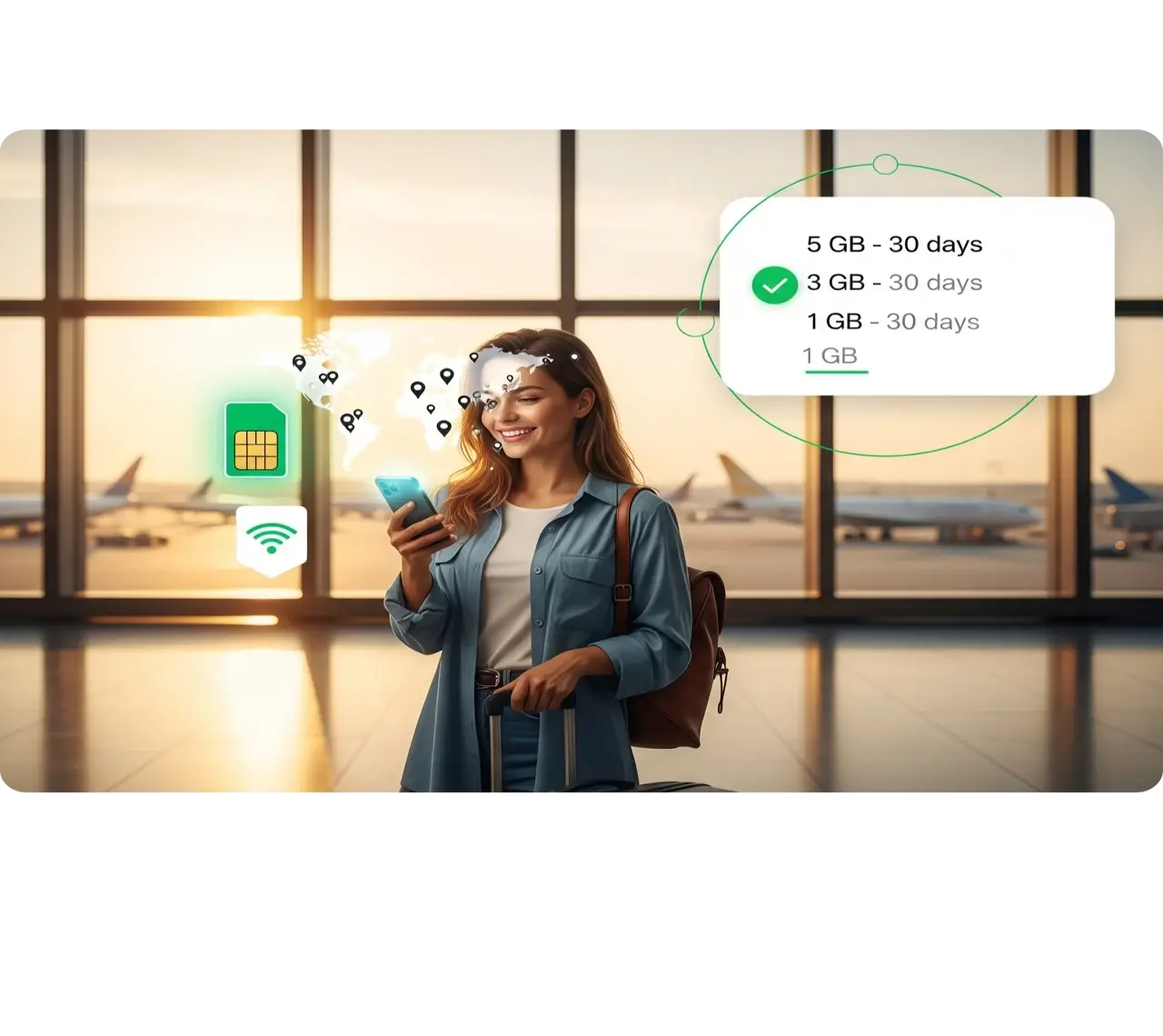
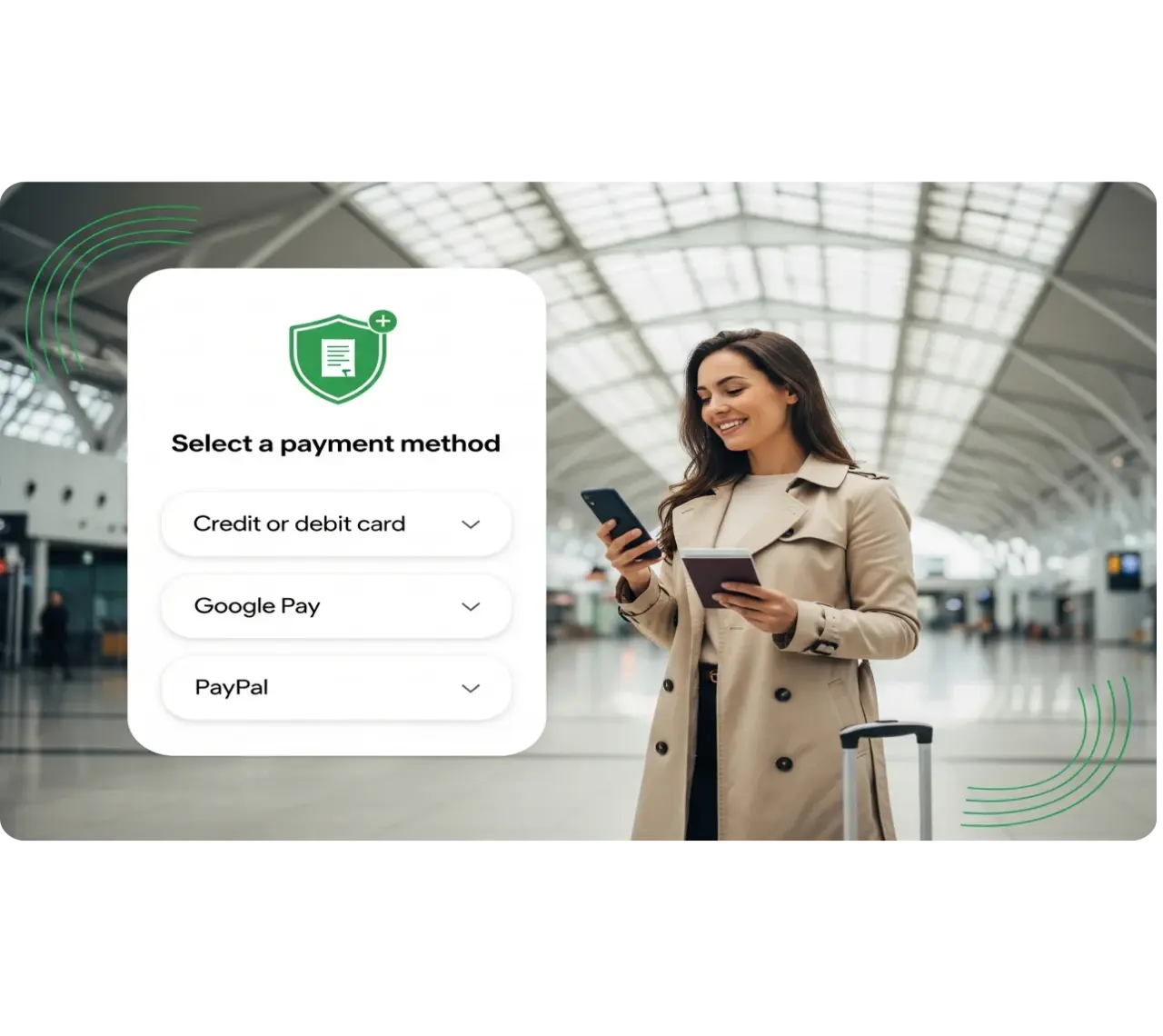
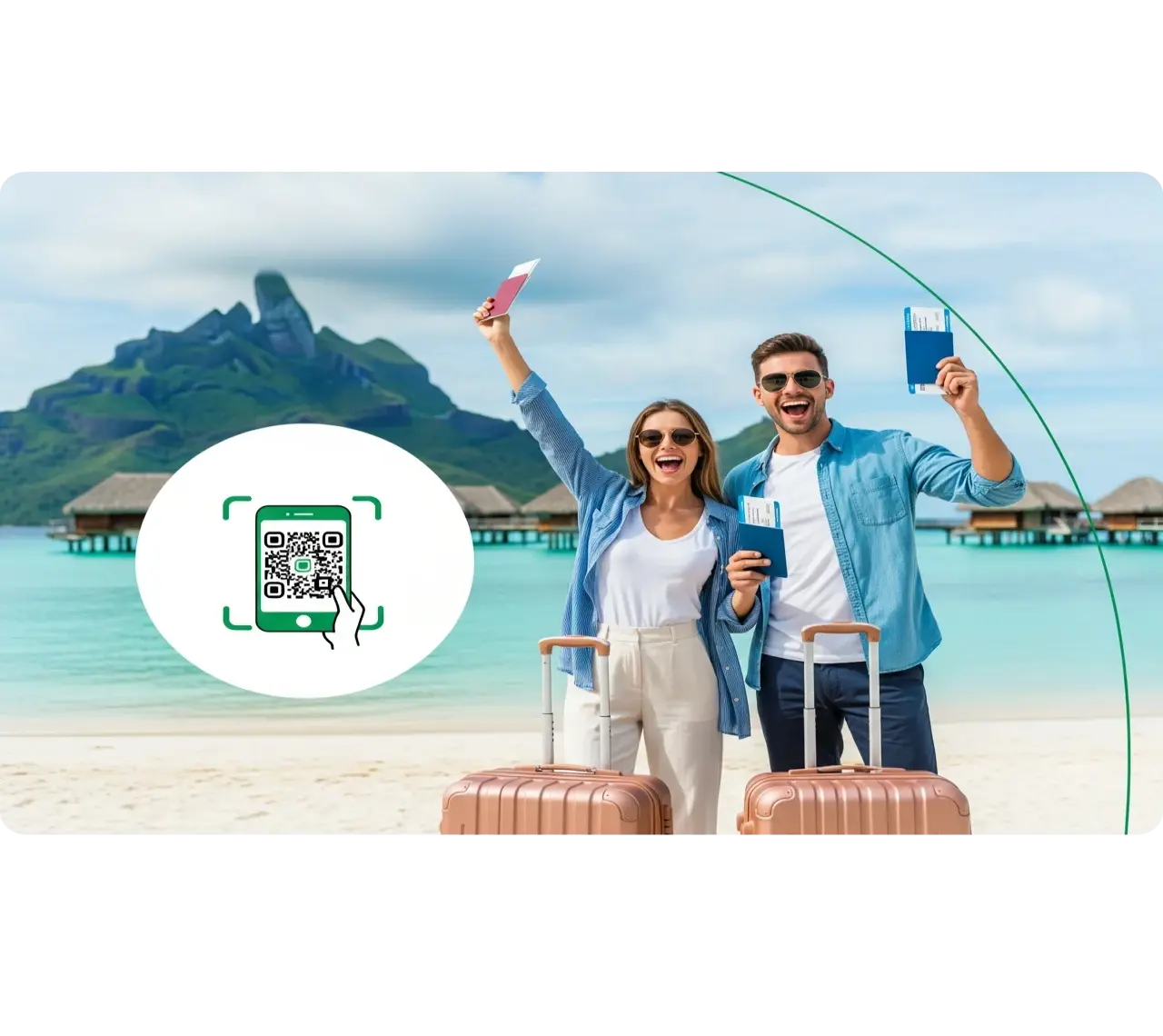
Planning your dream trip to Vietnam involves thinking about egg coffee, boat tours, and Hoi An's lanterns — not worrying about mobile data. Getting a Vietnam eSIM for tourists is the easiest way to stay connected instantly. For most travelers searching for the best eSIM for Vietnam, an eSIM for Vietnam offers seamless data without airport queues or paperwork, all while keeping your home number active for banking.
A local Viettel eSIM for Vietnam or other options are only worth the effort if you need a local number for apps. Whether comparing options like a Klook eSIM for Vietnam or choosing a data plan, this guide covers everything you need to stay online without expensive roaming fees.
Why Use an eSIM in Vietnam?
Read more
Landing in a new country without a connection is stressful. You step off the plane in Hanoi or Ho Chi Minh City, feel the heat, and realise you can't pull up your hotel address. Roaming on your home carrier is expensive, and the airport SIM counters mean queues and paperwork at the end of a long flight.
An eSIM changes that. You buy and install the profile before you fly, then switch the line on when you land and connect to a local network within seconds. There's no kiosk to find and no tray to open.
One caveat worth stating up front: a travel eSIM is a data plan, not a Vietnamese phone number. You can't receive Vietnamese SMS codes on it. That matters for a few local services, which is covered in the local-versus-travel section below.
How to Choose the Best eSIM for Vietnam
Read more
A single data plan doesn't suit every trip. If you're mostly relying on hotel and café Wi-Fi, a lightweight plan is plenty. However, if you're navigating via Grab on a moving scooter, tethering a laptop on the Reunification Express train, or exploring remote northern loops, you'll need higher bandwidth and dependable rural coverage.
Choosing the right package comes down to four key factors:
1. How Much Data Will You Need?
- Light Users (1GB / day): Best for Google Maps navigation, Grab ride-hailing, translation apps, and basic messaging on WhatsApp or Zalo.
- Heavy Users & Remote Workers (2GB–3GB / day or Unlimited): Essential if you stream videos during long intercity bus rides, upload social media content, or frequently tether (hotspot) data to a laptop.
2. How Long Is Your Trip?
Most prepaid travel eSIM plans are structured in 5, 7, 10, 15, or 30-day validities. Select a package that covers your itinerary from arrival to departure. It is best practice to add a 1-to-2-day buffer to your plan to account for unexpected transit delays or flight schedule changes.
3. Network Coverage Across Destinations
- Urban Hubs & Coastal Corridors (Hanoi, Da Nang, Ho Chi Minh City, Nha Trang, Phu Quoc): All major Vietnamese tier-1 carriers offer seamless 4G LTE and growing 5G connectivity.
- Mountainous & Remote Areas (Ha Giang Loop, Sapa, Ha Long Bay): Base-station density drops significantly. Choosing a provider that routes through Viettel ensures you maintain a stable signal where other carriers lose reception entirely.
4. Network Speed and Reliability
While commercial 5G deployment is expanding rapidly across major city centers (Hanoi and HCMC), 4G LTE remains the backbone of mobile connectivity throughout regional towns and rural routes. Ensure your travel eSIM connects directly to tier-1 host networks (Viettel or Vinaphone) rather than throttling via low-priority roaming agreements.
Mobile Networks in Vietnam That Support eSIM
Read more
When using an eSIM in Vietnam, your device connects to local infrastructure managed by one of three major national telecom operators. Understanding their distinct strengths ensures you select the right underlying carrier for your itinerary:
1. Viettel (Best Overall Coverage & Rural Reach)
As the state-owned military telecom operator and Vietnam's largest network provider (controlling over 50% market share), Viettel operates the most extensive cell tower infrastructure in the country. It is the gold standard for travelers heading off the beaten track — delivering reliable 4G LTE coverage across the Ha Giang Loop, Sapa's mountainous valleys, rural Mekong Delta routes, and Ha Long Bay.
2. Vinaphone (Best Urban Speed & 5G Performance)
Vinaphone (VNPT) consistently ranks at the top of independent speed benchmarks (such as Ookla Speedtest Intelligence) for pure download and upload throughput in metropolitan centers. It offers exceptional performance across Hanoi, Da Nang, and Ho Chi Minh City, as well as prominent coastal resorts. If your trip is centered on major cities and you prioritize video conferencing or ultra-fast tethering, Vinaphone is a top-tier choice.
3. MobiFone (Standard Urban Route Connectivity)
MobiFone is a reliable option for metropolitan corridors and popular coastal tourist hubs like Nha Trang and Da Nang. However, its rural footprint and tower density in remote northern highlands or interior jungle routes trail behind Viettel and Vinaphone. It is best suited for standard city-hopping itineraries.
Pro Tip for Travelers: Most high-grade international travel eSIMs automatically partner with Viettel or Vinaphone to guarantee high-priority tier-1 roaming access across both city centers and regional routes.
Local Vietnam eSIM vs. International Travel eSIM
Read more
When setting up mobile connectivity in Vietnam, travelers face a fundamental choice: purchasing an international travel eSIM before departure or registering a local eSIM directly from a Vietnamese telecommunications carrier upon arrival.
Understanding the regulatory requirements, setup friction, and functional differences will help you determine the right fit for your itinerary.
The Regulatory Reality: Vietnam's Subscriber Registration Laws
Vietnam enforces stringent subscriber registration regulations under Decree No. 49/2017/ND-CP and updated national telecommunications directives (Circular 08/2026). To activate a local prepaid profile:
- Foreign nationals must physically present their original passport (photocopies or digital images are strictly rejected).
- Authorized agents must capture a live facial biometric photograph to authenticate the subscriber in the national telecom database.
- Unregistered or third-party pre-activated SIM cards sold by unauthorized street kiosks are actively blacklisted and permanently disconnected by carriers.
For travelers arriving on long-haul flights, completing manual paperwork, biometric capture, and queueing at airport booths introduces unnecessary friction.
Functional Comparison: Do You Need a Local Phone Number?
- Ride-Hailing & Navigation: Popular apps like Grab work seamlessly with international phone numbers and data-only profiles. Driver communications and food delivery updates take place directly via in-app chat and VoIP calling.
- Banking & Verification: An international data eSIM operates as a secondary line, allowing you to keep your primary home SIM active to receive critical 2FA security SMS codes from your home bank without incurring data roaming fees.
- When a Local Number Is Mandatory: You only require a local (+84) number if your stay exceeds 30–90 days, or if you need to register for local Vietnamese banking applications or domestic e-wallets (such as MoMo or ZaloPay).
| Local Vietnam eSIM (Viettel / VNPT Storefront) | International Travel eSIM (Pre-departure Instant QR) |
|---|---|
| Local (+84) phone number | Data-only connection |
| Requires physical passport | No ID or passport upload |
| Mandatory facial biometrics | Instant delivery via email/app |
| Queue at airport or city hub | Ready to connect on touchdown |
| Best for long-term expat stay | Best for tourists & vacations |
| Feature | Local Vietnamese eSIM | International Travel eSIM |
|---|---|---|
| Primary Advantage | Includes a local (+84) calling number | Zero bureaucracy; immediate connectivity on arrival |
| ID & Passport Verification | Mandatory (Passport scan + Live Biometric Photo) | None (Instant online checkout) |
| Regulatory Compliance | Decree 49/2017/ND-CP compliant | Tier-1 roaming agreements via local partner networks |
| Activation Method | In-person verification or complex app onboarding | Instant QR code scan via email / app |
| Primary Line (2FA SMS) | Replaces or disables your domestic home line | Runs concurrently with dual-SIM (Home SIM stays active for SMS) |
| Customer Support | Local carrier desks (often Vietnamese-speaking only) | 24/7 dedicated support in English |
| Recommended Traveler | Long-term digital nomads (>30 days), local residents | Short-term tourists, vacationers, and business travelers |
Key Takeaway: For standard tourism (1 to 4 weeks), an international travel eSIM eliminates airport queues and personal biometric exposure, allowing you to hail a Grab ride and access maps the second your flight touches down.
How to Buy and Activate Your Vietnam eSIM
Read more
Setting up a digital data profile is surprisingly straightforward. The absolute best strategy is to buy and install the profile while sitting on your couch at home or using the Wi-Fi at your departure gate, then activate the line the second your flight touches down.
Here is exactly how to do it step by step.
1. Check Your Device Compatibility
Not every smartphone has the internal hardware to handle digital profiles. Dial *#06# on your phone keypad to see if an EID number pops up on your screen, or head into your network settings to verify that you have an "Add eSIM" option. Also, ensure your phone is fully unlocked by your home carrier.
2. Select Your Plan and Purchase Online
Just jump onto d-esim.com, click on the Vietnam section, and grab a plan that fits your trip length. Once you pay, check your inbox — the QR code for the setup usually appears within a minute or two.
3. Scan the QR Code to Install
Before you leave, open your phone's settings, go to Cellular or Mobile Data, tap "Add eSIM," and scan that QR code from your email. I highly recommend naming this new line something like "Vietnam Data" so you don't mix it up with your main home number. Just make sure to keep this new line switched off until you actually travel.
4. Turn On the Line Upon Arrival
The second your flight touches down in Hanoi or Ho Chi Minh City, jump back into your cellular settings. Toggle your "Vietnam Data" line to ON and set it as your main option for mobile data. You'll want to keep your physical home SIM active as your primary line for calls and texts so you don't miss any important bank verification codes.
5. Enable Data Roaming
Open the specific settings for your new Vietnamese data profile and toggle Data Roaming to the ON position. Your phone will immediately search the local airways, lock onto the closest Viettel or Vinaphone tower, and bring you online within seconds.
Important Setup Tip: Never delete your digital profile if the network does not show up instantly. Deleting the profile completely wipes the digital token, meaning you cannot scan the same QR code a second time.
If you experience a delay in connecting, simply turn airplane mode on and off once, or restart your device to force it to look for local network towers.
eSIM for Vietnam Frequently Asked Questions
Can I use an eSIM in Hanoi and Ho Chi Minh City?
Does Vietnam support 5G on travel eSIMs?
Which network operator provides the best coverage for a Vietnam eSIM?
Can I use my physical SIM and Vietnam eSIM simultaneously (Dual SIM)?
Is an international travel eSIM better than a local Vietnamese physical SIM?
Do I need to remove my existing physical SIM to install an eSIM?