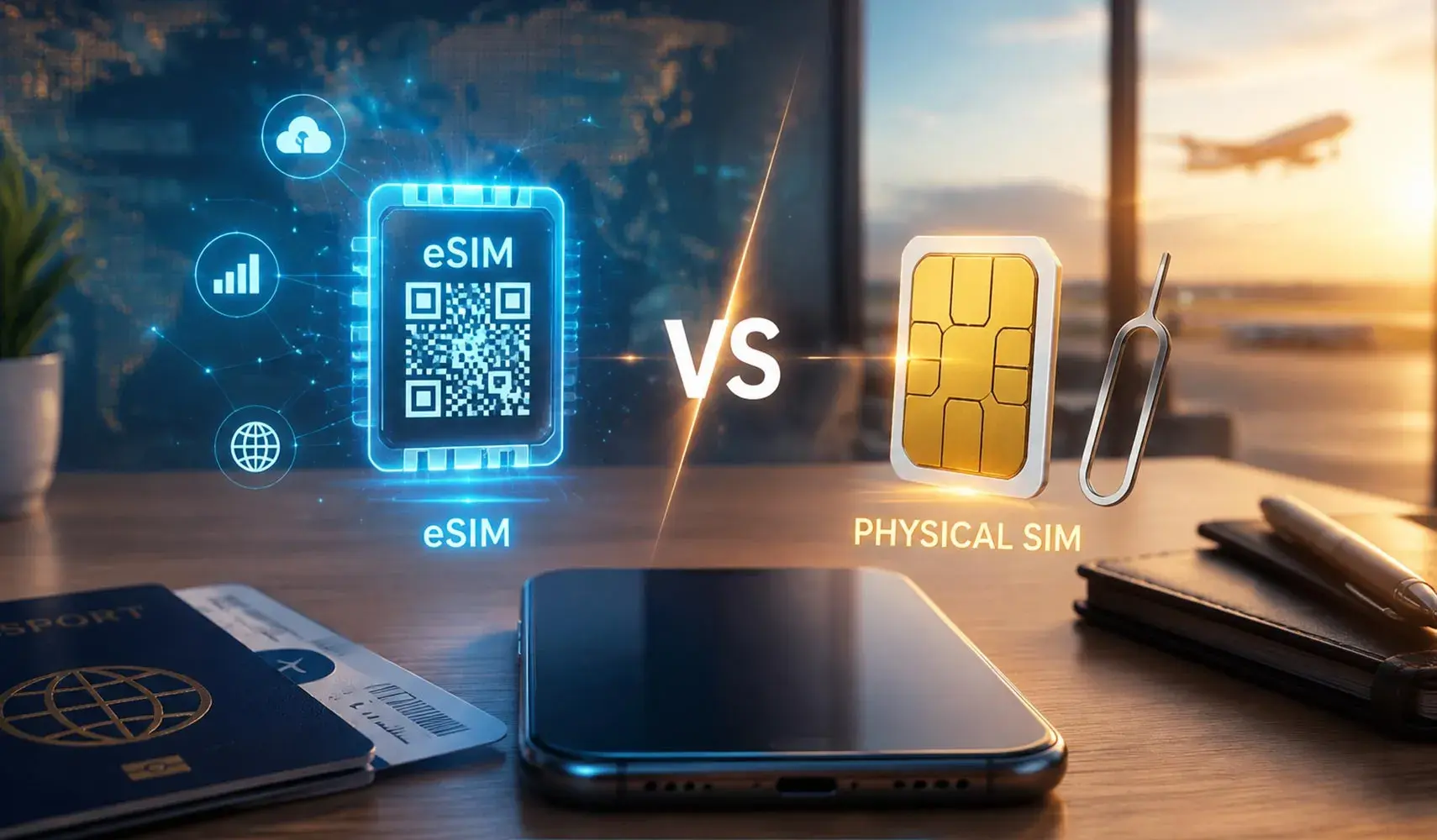
Traveling with reliable mobile data makes it easier to navigate, book rides, and stay connected abroad. Both eSIMs and physical SIM cards can provide that connection, but they differ in setup, convenience, compatibility, and flexibility.
When comparing eSIM vs physical SIM for travel, neither option is better for everyone. An eSIM can be convenient if you want to arrange mobile data before departure, while a physical SIM may suit travelers with devices that don't support eSIM or those who prefer a local carrier plan.
This guide compares both options to help you choose the right SIM for your device, destination, and travel needs.
Quick Comparison Between eSIM and Physical SIM
| Feature | eSIM (Digital SIM) | Physical SIM |
|---|---|---|
| What it is | A digital SIM built into a compatible device | A removable SIM card inserted into the device |
| Setup and activation | Usually installed digitally using a QR code, app, or activation details | Inserted into the device and activated according to the carrier's instructions |
| Buying before travel | Often available online before departure | May be purchased before travel, or from a carrier or retailer at the destination |
| Network performance | Depends on the plan, local network, coverage, device, and network conditions | Depends on the plan, local network, coverage, device, and network conditions |
| Dual SIM use | Can be used alongside another SIM on supported Dual SIM devices | Depends on the number of supported SIM slots and device capabilities |
| Security | Cannot be physically removed from the device | Can be removed, lost, or damaged |
| Device compatibility | Requires an eSIM-compatible and, where necessary, carrier-unlocked device | Requires a compatible physical SIM slot |
| Switching devices | Transfer options depend on the device and provider | Can often be moved physically between compatible unlocked devices |
| Keeping your primary SIM | Can remain installed while the eSIM is used for data on compatible Dual SIM devices | May require removing the primary SIM on devices with a single physical SIM slot |
What Is an eSIM?
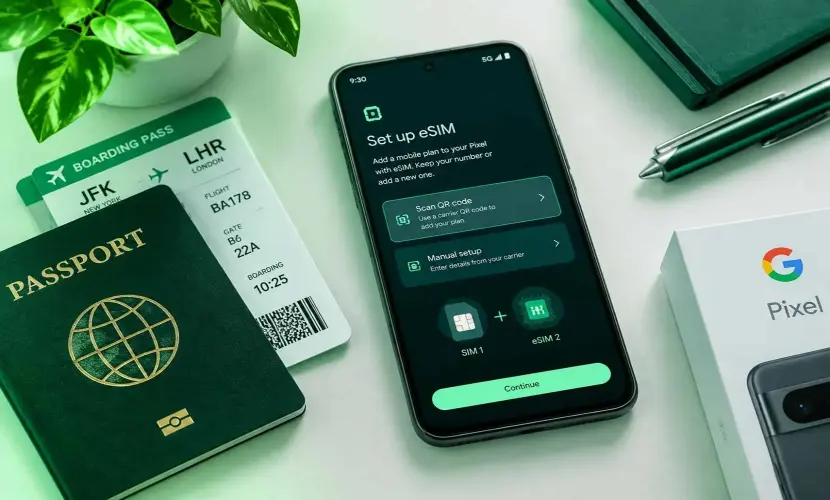
An eSIM is a digital alternative to a physical SIM card. It lets a compatible device connect to a mobile network without inserting or swapping a physical SIM. Depending on the provider, setup may be completed using a QR code, an app, or manual activation details.
What Is a Physical SIM?
A physical SIM is a removable card that you insert into your phone. It contains the information needed to identify your subscription and connect your device to a mobile network.
To change providers or get local data in a new country, you physically swap the card out using a small ejector pin.
eSIM vs Physical SIM: Side-by-Side Comparison
Here is how choosing an eSIM vs SIM card actually plays out in real travel situations.
1. Activation
Activating a physical SIM usually involves inserting the card into your phone and following the carrier's setup instructions. Depending on the provider and destination, you may be able to buy one before your trip or purchase and activate it after arrival.
An eSIM can often be purchased and installed digitally before departure using a QR code, provider app, or manual activation details. When the plan becomes active depends on the provider, so check the activation instructions before traveling.
2. Convenience
Handling physical cards while moving between airports, taxis, and hotels can easily lead to misplaced items. Swapping tiny pieces of plastic requires holding onto a removal tool and keeping track of your home network card in a safe pocket.
Digital setups remove that physical maintenance entirely. You store multiple profiles right inside your phone settings, allowing you to toggle between your home carrier and local data plans with a quick tap on your screen.
3. Network Performance
There is a common misconception that digital profiles run slower than physical cards. In reality, network performance is the same if both options run on the same local carrier infrastructure.
Whether you connect via an eSIM or a plastic card, your data speeds depend on the network operator's cell towers and local 5G availability in your exact area.
4. Security
Physical cards come with clear security risks when you travel. If your phone gets stolen or lost, anyone can pop out your plastic SIM card, insert it into another phone, and attempt to intercept your SMS security codes.
An embedded profile is built permanently into your handset. Thieves cannot physically remove it, and if your device goes missing, you can remotely lock your handset or wipe your data profiles via cloud management services.
5. Cost
Local physical cards bought directly at airport arrivals desks often come bundled with overpriced tourist packages including unwanted call minutes or SMS allowances.
Ordering your data plan online lets you select exact gigabytes ahead of time. Comparing an eSIM vs local SIM beforehand keeps your costs predictable, saving you from expensive bundled packages pushed at airport arrivals.
6. Device Compatibility
Most phones built in recent years handle digital profiles without issues, including newer iPhones and Android flagships. If you want to install an eSIM in iPhone models released after the XS and XR series, the iOS software guides you through a seamless setup in under a minute.
However, older smartphones and budget handsets still rely exclusively on traditional SIM trays. Before purchasing a digital plan, always verify in your phone settings whether your device is carrier-unlocked and eSIM compatible.
Checking compatibility takes less than a minute on your phone:
- On iPhone: Go to Settings, tap General, then select About. Scroll down to Carrier Lock. If it says "No SIM restrictions," your device is fully unlocked. You can also look for an Add eSIM button under your Cellular settings to confirm support.
- On Android: Open Settings, tap Connections or Network & Internet, and look for a SIM Card Manager option. If you see an option to add a mobile plan or scan a QR code, your handset is ready for digital profiles.
Important: All iPhone models sold in the United States since the iPhone 14 series omit the physical SIM tray altogether and rely exclusively on eSIM.
7. Switching Phones
This is one area where a plastic card still holds a slight edge. Moving your phone number from one phone to another takes seconds with a physical card: you pop the tray open and move the plastic card over.
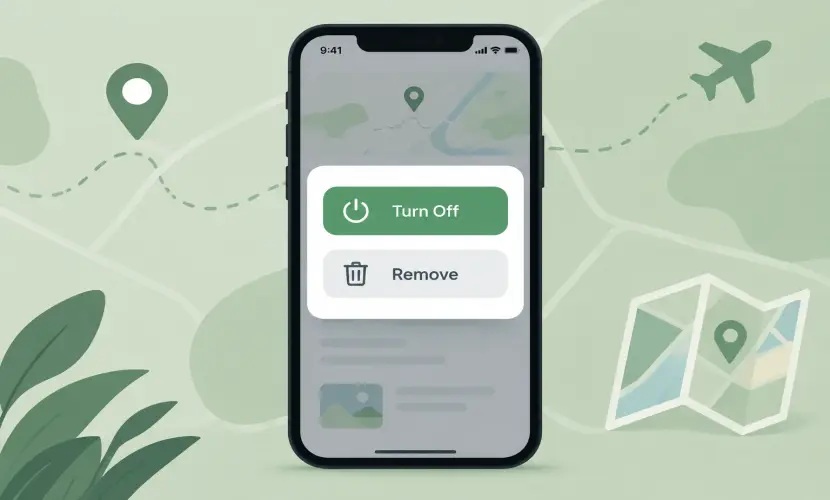
Transferring a digital plan to a new phone requires deleting the profile from your old device and re-scanning the activation code, or contacting your provider to issue a fresh QR code on the new handset.
8. International Travel
If your trip takes you across multiple borders, relying on physical cards becomes tedious quickly. Landing in a new country means hunting down another local mobile shop, converting currency, and swapping plastic cards every few days.
Using an eSIM for travel completely changes multi-destination trips. Multi-country journeys are much simpler with regional plans like a Europe eSIM or an Asia eSIM. You buy one package before leaving home, and your phone automatically picks up local partner networks as you move from one country to the next.
Crossing from France into Italy or traveling through Asia means you never have to tweak your settings or look for phone shops at train stations. One regional data plan connects to local towers on its own. You keep steady internet for maps and messages without paying extra connection fees or exchanging cash for local SIM cards in every country.
When Should You Choose an eSIM?
Going digital is almost always the smarter pick if you value speed and convenience. It makes the most sense in these everyday travel situations:
- You want mobile internet working the moment your flight touches down so you can order a ride or check map directions right away.
- You are visiting several countries on one trip and do not want to hunt down a new phone shop at every border.
- You need your main phone number to stay active for bank security codes and work calls while you run data on a second line.
- You do not want to deal with airport SIM kiosk lines or pushy sales reps selling overpriced tourist bundles.
- You worry about losing your tiny physical home SIM card while swapping it out on a tray.
Planning an upcoming trip abroad? Pick your destination and set up your mobile data in under two minutes before you fly. Browse travel eSIM plans.
When Is a Physical SIM the Better Choice?
Plastic SIMs are still useful in a few situations:
- You use an older phone that cannot run eSIMs.
- Your device is locked to your home provider, preventing you from adding new data lines.
- You are visiting remote areas where small local carriers only sell regular SIM cards.
- You explicitly need a local phone number for traditional voice calls and texts, not just mobile data.
- You like switching your SIM between different phones on the go without dealing with setup settings.
Can You Use Both Together?
Yes. Most recent smartphones support Dual SIM functionality, meaning you can keep your plastic SIM inside while running a digital profile alongside it.
This combination works well on trips. You leave your home SIM on for incoming calls and bank security codes, but use your travel eSIM for cheap mobile internet. Turn off roaming on your main SIM so your carrier does not charge you extra.
Setting up both lines only takes a few taps. Assign your travel eSIM for Cellular Data and leave your home SIM set as your Default Voice Line.
Tip: Turn off Allow Cellular Data Switching in your settings. This stops your phone from quietly jumping back to your home network and charging roaming fees if your travel data drops for a moment.
Conclusion
Deciding between an eSIM vs SIM card really depends on your device and how you like to travel.
If you want an easy trip without airport stress, an eSIM for international travel is the way to go. You get internet data immediately when your plane lands, keep your home SIM safe inside your phone, and avoid standing in long store lines after a long flight.
That said, a standard physical SIM card is still a solid backup option. It mostly comes in handy on older devices or when traveling off the grid. For most travelers today, switching to a digital plan is simply the easiest way to stay connected on the road.
Evaluate your device compatibility, check your travel route, and pick the setup that makes your journey as smooth as possible.
Frequently Asked Questions
For most travelers, yes, because you skip airport store queues and get connected the moment you land. A plastic card is only better if you run an older phone without eSIM compatibility.
Comments (0)
Leave a comment