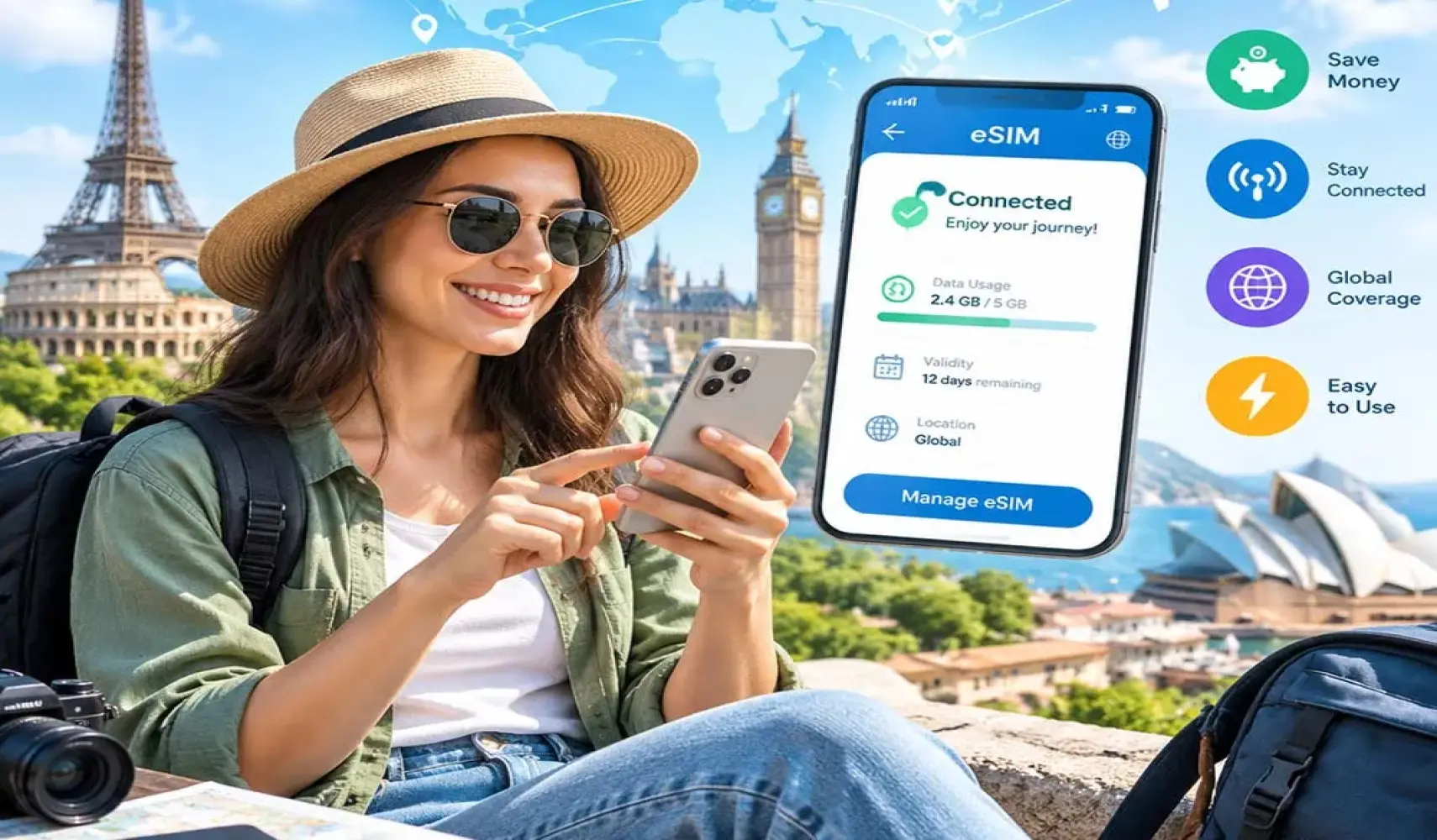
Coming home to a phone bill bloated with unexpected roaming charges is the fastest way to ruin a great trip.
The quickest fix is disabling Data Roaming on your primary line and relying on hotel Wi-Fi, a travel eSIM, a local SIM, or a daily carrier pass. Just remember that switching off mobile data alone won't stop your carrier from billing you for answering calls or sending regular texts; those rates depend on your carrier.
A travel eSIM is usually the easiest middle ground: it handles your internet at a cheap local rate while leaving your regular number open for bank verification codes. Here is how to lock down your iPhone or Android settings.
What Are Roaming Charges and When Do They Apply?
Roaming charges happen the moment your phone connects to a cell tower in another country. Your home carrier pays that foreign network to let you use its service, then passes the cost on to your next bill, usually with a heavy markup.
It boils down to four things: using internet data on the go, making or answering phone calls, sending regular SMS texts, and background app syncing, such as photos backing up while your phone is in your pocket.
The detail most people miss is that turning off Data Roaming only cuts off the internet. It won't protect you from charges if you pick up an incoming phone call or reply to a standard text message.
Seven Ways to Stop Roaming Charges Before You Fly
A few settings changes before you leave are your best defense. Here are seven ways to lock down your line, step by step.
1. Turn Off Data Roaming
This should be the very first thing you do before your plane leaves the tarmac. Flipping this switch blocks your phone from using internet data on foreign cell towers, instantly killing background app updates, web browsing, and accidental downloads.
- iPhone (dual SIM): Open Settings, tap Cellular (or Mobile Data), tap your home line, then toggle Data Roaming off.
- iPhone (single SIM): Open Settings, tap Cellular, then Cellular Data Options, and toggle Data Roaming off.
- Samsung: Open Settings, tap Connections, then Mobile Networks, and switch Data Roaming off.
- Pixel and most other Android phones: Open Settings, tap Network & Internet, then SIMs, tap your home SIM, and switch Roaming off.
Quick heads-up: Switching off Data Roaming only blocks mobile internet. Answering a call or sending a regular text can still be billed at your carrier's roaming rates.
2. Use a Travel eSIM
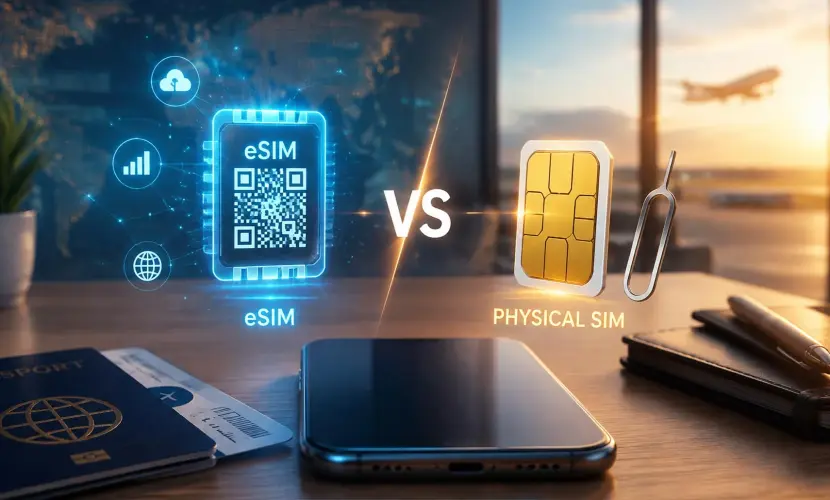
For most modern travelers, a travel eSIM is the smartest solution. An eSIM lets you download a digital local data profile straight to your phone before you leave home.
By assigning your travel eSIM as your dedicated data line, you get cheap local internet rates while keeping your primary home SIM turned on for essential bank verification codes and urgent texts. You don't have to swap out physical plastic chips, stand in airport store lines, or pay your home carrier's international rates.
Ready to skip roaming fees entirely? Browse our travel eSIM plans and get instant, affordable data for your destination before you even pack your bags.
3. Disable Automatic Cellular Data Switching
If you use a Dual SIM setup, such as keeping your home SIM active for calls alongside a travel eSIM for data, your phone might try to help you when the local data network gets weak. If data switching is enabled, your device will silently switch back to your home SIM for internet access, immediately triggering roaming fees.
- iPhone: Go to Settings, tap Cellular, then Cellular Data, and turn off Allow Cellular Data Switching.
- Samsung: Go to Settings, tap Connections, then SIM Manager, and toggle Auto data switching off.
- Pixel and other Android phones: Look under Settings, Network & Internet, SIMs for an automatic data switching option and turn it off. If your phone doesn't have one, make sure mobile data is enabled only on the travel eSIM.
4. Use Wi-Fi When Available
Whenever you are at your hotel, a café, or an airport terminal, connect to a secure Wi-Fi network. Use Wi-Fi to load heavy media, stream videos, and back up photos to the cloud without touching your cellular allowance.
To take it a step further, switch your messaging over to internet-based apps like WhatsApp, iMessage, Signal, or Telegram, and use FaceTime, WhatsApp, or Google Meet for calls. These services use data instead of cellular voice minutes, so calling over hotel Wi-Fi costs you nothing.
5. Turn Off Your Primary SIM Completely
If your home carrier charges high rates just for receiving calls or texts, turning off Data Roaming might not be enough. Disabling your primary SIM line turns off your home number entirely so it can't connect to foreign cell towers at all.
- iPhone: Go to Settings, tap Cellular, tap your primary SIM, and toggle Turn On This Line off.
- Samsung: Open Settings, tap Connections, then SIM Manager, tap your home SIM, and switch it off.
- Pixel and other Android phones: Open Settings, tap Network & Internet, then SIMs, tap your home SIM, and turn off Use SIM.
6. Consider an International Roaming Package
If your phone doesn't support eSIMs and you don't want to buy a local plastic SIM card, look into your home carrier's international add-ons. Keep in mind that a pass session starts the moment you make or answer a call, send a text, or use any data, so a single background app refresh can trigger a full day's charge.
While a daily pass is far cheaper than pay-as-you-go roaming rates, the daily fees add up quickly over a two-week trip, and a flat-rate travel eSIM typically costs a fraction of that for the entire trip.
7. Keep an Eye on Your Data Usage
Even on a cheap travel eSIM or local plan, tracking your usage keeps you from suddenly running out of maps in the middle of nowhere.
- Set an Android data limit: On Pixel, go to Settings, Network & Internet, SIMs, tap your travel eSIM, then Data warning & limit. On Samsung, go to Settings, Connections, Data usage, then Mobile data usage. Either lets you set a warning or a hard cap that shuts off mobile data once you hit your chosen limit.
- Track usage on iPhone: Scroll to the bottom of Settings, Cellular and tap Reset Statistics on the day you land to see exactly how many megabytes your travel line is consuming.
- Enable Low Data Mode: Both iOS and Android have a Low Data Mode (or Data Saver) in their network settings that stops automatic photo syncing, background app refreshes, and auto-playing videos.
Travel eSIM vs Local SIM vs Carrier Pass: How the Options Compare
No single method works for every traveler. Some people want the absolute cheapest route, while others want something that works the second they land without a headache. Here is how the five main options compare.
| Method | Cost Level | Setup Effort | Primary Number Active? | Best Suited For |
|---|---|---|---|---|
| Travel eSIM | Low | Very easy | Yes, on a dual SIM setup | Modern smartphones, multi-country trips, keeping bank SMS active |
| Local SIM | Low | Moderate | Usually no, unless your phone has a second slot or an eSIM home line | Budget travelers with unlocked phones that don't support eSIM |
| Carrier day pass | High, a flat daily fee; see your carrier's site | Extremely easy | Yes | Short 1 to 3 day business trips where the company pays the bill |
| Wi-Fi only | Free | Easy | Optional, with a risk of fees if cellular stays on | Travelers on tight budgets who don't need navigation on the go |
| Airplane Mode | Free | Instant | No | Complete protection against accidental fees while in transit |
How to Pick the Right Option
- Travel eSIM: Instant data when you touch down. No physical SIM swapping, so bank texts and WhatsApp keep working on your regular number.
- Local physical SIM: You have to hunt down a phone shop at the airport, wait in line, and hope you don't lose your tiny original SIM card after taking it out.
- Carrier day pass: Makes sense for very short trips of one or two days if you need regular voice calls on your primary number and don't mind paying a daily fee.
- Airplane Mode and Wi-Fi: Perfect for a zero-dollar budget if you're comfortable relying on hotel Wi-Fi and offline maps to get around town.
Planning your next trip? Grab a travel eSIM in under two minutes and enjoy seamless, high-speed data as soon as you land.
Setting Up a Travel eSIM So Your Phone Never Falls Back to Your Home SIM
Adding a travel eSIM to your phone is easy, but the trick is making sure your handset actually routes internet through the new plan and doesn't silently jump back to your home SIM. Here are the settings you'll want to lock down.
Before Flying Out
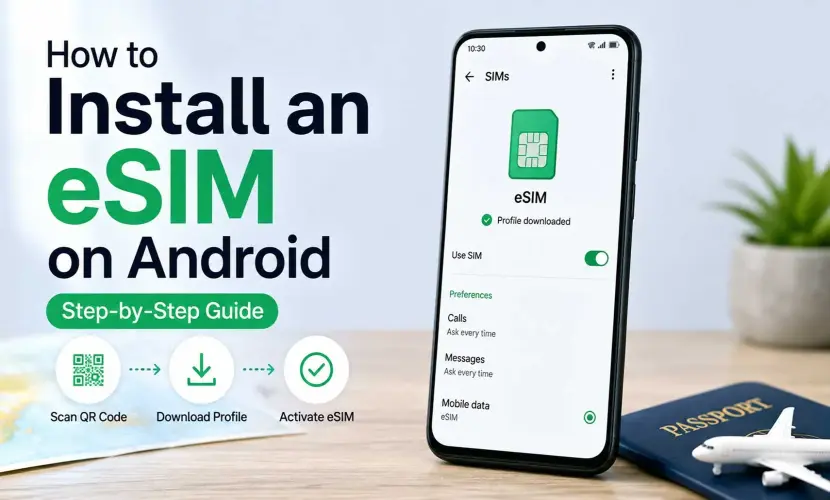
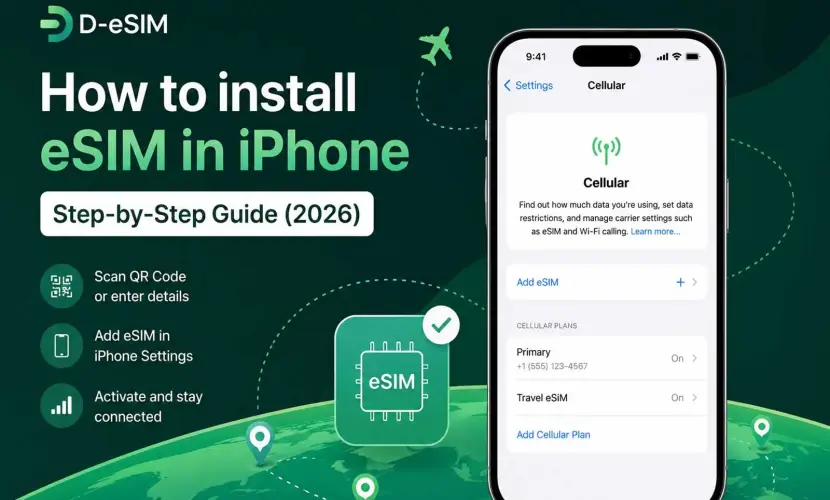
- Install the eSIM while you're still on home Wi-Fi. Scan your QR code before heading to the airport. If you've never done it before, we have quick guides on installing an eSIM on Android and installing an eSIM on iPhone.
- Turn off Data Roaming on your main line. This stops your home provider from charging you for background data abroad.
- Rename your SIMs. Calling your main number "Home" and the new line "Travel Data" in your settings makes things a lot less confusing later.
When Your Plane Lands
- Switch your mobile data to the eSIM. Go into settings and select your new travel line as the default choice for Cellular Data.
- Turn Data Roaming on for the eSIM only. Most travel plans need Data Roaming turned on for that specific profile to connect to local cell towers. Double-check that your home SIM's roaming switch stays off.
- Shut off auto-switching. Disable Allow Cellular Data Switching on iPhone, or Auto data switching on Samsung, so your phone can't fall back to your home SIM whenever the local signal stutters.
While You're Traveling
Glance at your control center now and then to make sure the phone is actually pulling data from your travel profile, and check your remaining balance in your provider's app every few days so you don't run out of maps unexpectedly.
Staying Connected on a Cruise Without Satellite Fees
Cruising is tricky because once you leave the coast, your phone connects to maritime satellite networks, often shown as "Cellular at Sea". Satellite rates are brutal; a few background app updates can easily run up hundreds of dollars.
Here is how to keep your bill at zero while sailing:
- Stay in Airplane Mode at sea: Turn Airplane Mode on as soon as the ship leaves port and keep it on the entire time you're on the water. It's the only way to completely block costly satellite connections.
- Get a cruise Wi-Fi pass for internet: If you need to stay connected, buy a Wi-Fi package directly from the cruise line. Keep Airplane Mode on, switch Wi-Fi back on, and log in.
- Stick to messaging apps for calls and texts: Skip standard phone calls and texts altogether so you don't get hit with satellite rates. Use apps like WhatsApp or iMessage over the ship's Wi-Fi instead.
- Save your travel eSIM for port days: Travel eSIMs work on land towers, not cruise satellites. Only turn Airplane Mode off and enable your travel eSIM once you're docked at port, and remember to flip Airplane Mode back on before the ship sails again.
- If you really need your home number at sea: Verizon and AT&T both sell cruise-specific day passes, with pricing on the TravelPass and International Day Pass pages linked above. They're still expensive, but you pay a fixed daily fee instead of open-ended satellite rates.
Pre-Travel Checklist
- Check phone eSIM compatibility. Make sure your handset supports eSIM before purchasing a plan.
- Make sure your phone is carrier-unlocked. If your phone is locked to your home provider, it won't accept a travel eSIM or local SIM.
- Install your eSIM before heading out. Scan the QR code over home Wi-Fi the night before you leave so it's ready to go.
- Turn off Data Roaming on your primary SIM. This stops your main provider from drawing international data.
- Set the eSIM as your default data line. Route all mobile internet strictly through your travel profile.
- Disable automatic data switching. This keeps your phone from jumping back to your home line when signal dips.
- Check incoming call and text rates. Verify what your home carrier charges for answering voice calls abroad.
- Turn on Low Data Mode or Data Saver. Stop background apps from downloading heavy updates behind your back.
- Download offline Google Maps. Save map areas for your destination ahead of time so you can navigate without a cellular connection.
- Screenshot your setup codes. Keep your activation details saved in your photo gallery in case you need them offline.
Frequently Asked Questions
Yes. Turn off Data Roaming on your main line and route all internet through a travel eSIM. This keeps your home SIM active for bank texts while preventing your phone from using expensive home carrier data. Just don't answer calls or send texts on the home line unless you've checked what your carrier charges for them.
Comments (0)
Leave a comment